
Korked and Confused
Wine education made fun, approachable, and totally judgment-free.
Don't Know Your Pinot from Your Prosecco?
Welcome to Korked and Confused — the beginner-friendly corner of Half Korked Winery where we break down wine myths, share fascinating facts, and make learning about wine as enjoyable as drinking it. No sommelier certification required.

Wine Facts That Will Blow Your Mind
There are over 10,000 varieties of wine grapes in the world — but only about 1,300 are used commercially.
Wine has been made for at least 8,000 years. The oldest known winery was discovered in Armenia, dating back to 4100 BC.
A standard bottle of wine contains about 5 glasses. A standard barrel holds roughly 300 bottles.
Temperature matters! Wine should be stored between 45–65°F (7–18°C). Too warm and it ages too fast; too cold and it loses flavour.
Your sense of smell accounts for up to 80% of what you taste in wine. That's why swirling your glass matters — it releases aromas.
Champagne bottles are thicker than regular wine bottles because they must withstand up to 90 psi of pressure — three times the pressure in a car tire.
Beginner Guides
Red vs. White: What's the Difference?
It's not just colour! Red wines are made with the grape skins left in during fermentation, giving them tannins and deeper flavour. White wines are fermented without skins, making them lighter and crisper. Rosé sits in the middle — skins are included briefly.
Dry, Sweet, or Somewhere In Between?
"Dry" wine simply means the sugar has been fully fermented into alcohol — it's not about flavour dryness. Sweet wines retain more residual sugar. Most table wines are dry. If you're new to wine, a semi-sweet or off-dry style is a great starting point.
How to Read a Wine Label
Wine labels can be intimidating, but they follow a pattern: look for the region (where it's from), the grape variety or blend, the vintage year, and the producer. New World wines (like Canadian or Australian) usually name the grape. Old World wines (French, Italian) often name the region instead.
Food and Wine Pairing Made Simple
The golden rule: match the weight of the food to the weight of the wine. Light fish → light white wine. Rich steak → bold red. Spicy food → off-dry white or rosé. Dessert → something sweeter than the dish. When in doubt, bubbles go with everything.

Want to Go Deeper?
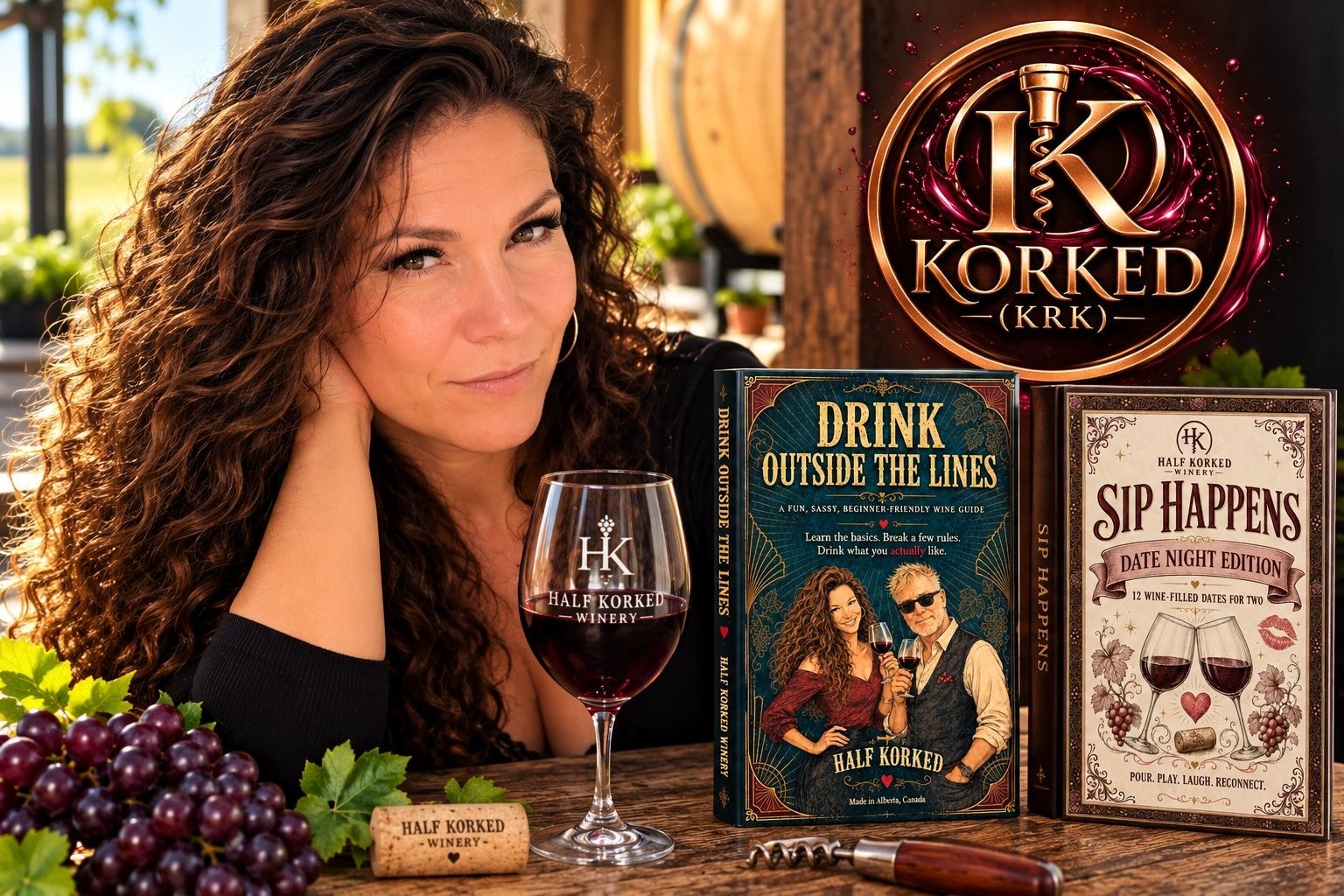
Our beginner wine guide Drink Outside the Lines is available on Amazon and walks you through everything you need to know — without the snobbery.
Get the BookStill Confused? That's Okay.
Wine is a journey, not a destination. Reach out to us — we love talking wine with beginners and enthusiasts alike.
Contact Us